Local SEO for Small Businesses in India: How to Get Found by Nearby Customers
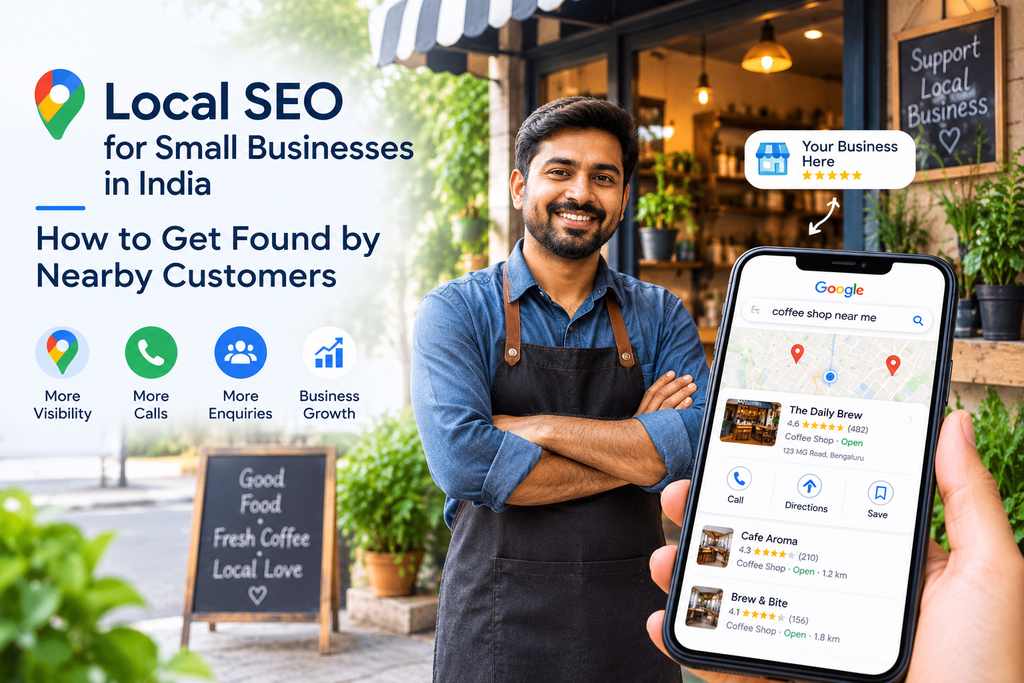
When someone searches for “best salon near me,” “dentist in Bengaluru,” or “plumber in Delhi,” they are often looking for a business they can contact soon. If your business does not appear in relevant local search results, you could miss opportunities to connect with these potential customers.
This is where local SEO for small businesses in India can help. It improves your business’s visibility in location-based searches on Google Search and Google Maps, helping nearby customers discover your products or services.
Whether you own a restaurant, clinic, salon, coaching centre, or home-service business, local SEO can help you reach people who are actively searching for what you offer.
In this guide, you will learn practical ways to improve your local search visibility and attract more calls, visits, and enquiries.
What Is Local SEO?
Local SEO, or local search engine optimization, is the process of improving your online presence so that customers can find your business when searching for products or services in a specific location.
For example, a customer searching for “AC repair in Pune” may see local businesses, Google Maps results, reviews, and relevant websites.
Local SEO helps your business become more relevant and discoverable for these searches.
Unlike general SEO, which may target a broad audience, local SEO focuses on customers searching within your service area. This makes it especially useful for small businesses that serve a particular city, neighbourhood, or region.
1. Optimize Your Google Business Profile
Your Google Business Profile is one of the most important starting points for local SEO. It allows your business to display useful information on Google Search and Google Maps.
To optimize your profile:
- Add your correct business name and primary category.
- Provide an accurate address or service area, as appropriate.
- Update your phone number, website, and business hours.
- Add clear photos of your business, products, team, or completed work.
- List the services you actually provide.
- Keep your information updated when anything changes.
For example, a salon in Hyderabad should clearly describe its services, display accurate opening hours, and make it easy for customers to call or get directions.
Avoid adding extra keywords to your business name just to influence rankings. Keep your information accurate and follow Google’s guidelines.
2. Target the Right Local Keywords
Local keyword research helps you understand how potential customers search for businesses like yours.
Instead of targeting only a broad term such as “digital marketing,” a business could target more specific phrases such as “digital marketing agency in Jaipur” or “SEO services for small businesses in Chennai.”
Use a combination of service-related and location-related keywords.
Examples include:
- Dentist in Bengaluru
- Best salon in Indiranagar
- Home cleaning services in Mumbai
- AC repair in Pune
- Local SEO services in Ahmedabad
Include relevant keywords naturally in your website headings, page titles, service descriptions, and content.
Do not repeat the same phrase excessively. Focus on creating useful pages that answer customers’ questions and explain how your business can help them.
3. Create Location-Specific Website Pages
If your business serves multiple areas, location-specific pages can help customers find relevant information.
For example, a pest control company serving Bengaluru might create pages for its main services and the locations it genuinely covers.
Each page should provide useful, locally relevant details, such as:
- Services available in that area
- The types of customers you serve
- Relevant service information
- Frequently asked questions
- Clear contact or booking options
Avoid creating many nearly identical pages that simply replace one city name with another. Each page should offer genuine value to visitors.
For businesses serving only one location, a well-optimized main service page may be more useful than creating unnecessary location pages.
4. Build Trust With Genuine Customer Reviews
Customer reviews can influence whether people choose your business over another local provider.
Encourage satisfied customers to share honest feedback after a purchase or completed service. You can send them your Google review link through an appropriate follow-up message.
To manage reviews effectively:
- Make it easy for customers to leave feedback.
- Respond politely to positive and negative reviews.
- Address genuine complaints professionally.
- Never buy reviews or offer incentives in exchange for positive ratings.
- Protect customers’ private information in public replies.
For example, a restaurant owner who responds thoughtfully to customer feedback shows potential visitors that the business values customer experience.
Reviews can help build trust, but no particular number of reviews guarantees a higher Google ranking.
5. Keep Your Business Information Consistent
Your business details should be accurate wherever customers find you online.
Check your business name, address, phone number, website, and opening hours across your website, Google Business Profile, and relevant business directories.
Outdated phone numbers or incorrect addresses can confuse potential customers and cause them to contact the wrong business.
Prioritize accurate information on your own website and Google Business Profile. Then review reputable directories that are relevant to your industry and location.
The goal is to make it easy for customers to recognize your business and contact you without confusion.
6. Make Your Website Mobile-Friendly
Many customers search for local services while travelling, shopping, or looking for immediate help. Your website should make it easy for them to take the next step.
A mobile-friendly website should:
- Load efficiently on mobile devices.
- Display contact information clearly.
- Make phone numbers easy to tap.
- Explain your services in simple language.
- Include clear buttons such as “Call Now” or “Request a Quote.”
- Provide a straightforward contact or booking form.
For example, someone searching for an electrician may want to call immediately rather than navigate through several pages.
A simple, helpful mobile experience can reduce friction and make it easier to turn website visitors into enquiries.
7. Track Your Local SEO Performance
Local SEO should be measured by business outcomes, not just rankings.
Review available Google Business Profile performance data and your website analytics to understand how people discover and interact with your business.
Track metrics such as:
- Search visibility and website clicks
- Calls and direction requests, where reported
- Contact form submissions
- Booking requests
- Qualified leads and new customers
Review these results regularly to identify what is working and where improvements are needed.
Remember that visibility does not automatically lead to sales. Your services, pricing, customer experience, and follow-up process also influence whether an enquiry becomes a paying customer.
Conclusion: Help Nearby Customers Find Your Business
Local SEO for small businesses in India is a practical way to improve your online presence and connect with customers searching for services nearby.
Start by optimizing your Google Business Profile, targeting relevant local keywords, creating useful service pages, collecting genuine reviews, keeping business information accurate, and improving your mobile website.
Make these activities part of your regular marketing strategy, and measure their impact on actual enquiries and customers.
Want to improve your local visibility on Google? Our digital marketing team can review your Google Business Profile, website, and local SEO strategy to identify practical opportunities for growth.
Contact us today to discuss a local SEO plan tailored to your business and service area.